Kiernan
In the WoodsKiernan is a retired detective whose investigation into the disappearance of two children in Knocknaree left him with a lasting sense of failure. Years later, he could still recall the case in detail, and his unresolved theory—that the children had never left the area—gave Cassie a way to reconsider the original search. His recollections preserve both the scale of the effort and its central frustration: the possibility that the answer had been close at hand all along.
Background and the Knocknaree Case
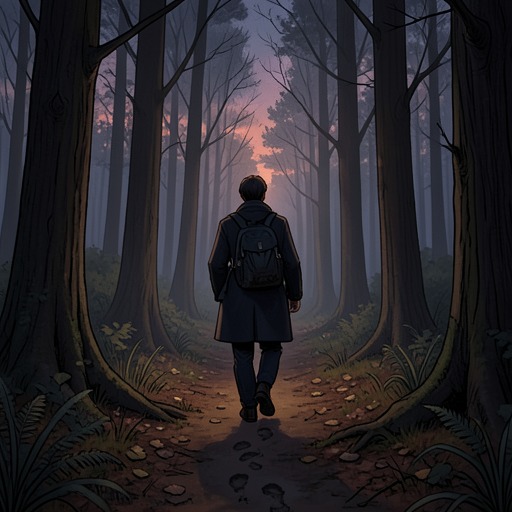
By the time Cassie visited him, Kiernan was in his seventies and living in Laytown, a coastal commuter village. He had taken up woodworking and appeared settled in retirement. His wife wrapped a scarf around him and kissed his cheek before he went out for a long walk with Cassie along the beach. The ordinary warmth of that scene sits beside the case he carried with him: retirement had not erased his memory of the children who had gone missing under his responsibility.
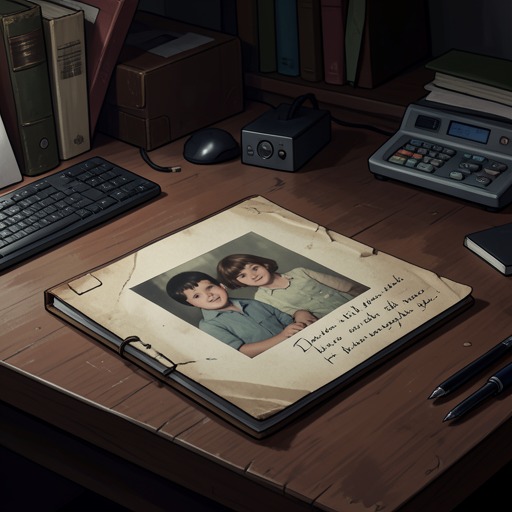
Kiernan remembered that disappearances of this kind were exceptionally rare in Ireland. Fewer than half a dozen children had vanished and remained missing, and two of those cases had been given to him. He believed he had failed the children. His account to Cassie was not simply a catalogue of investigative decisions; she sensed that he had revisited the case privately many times and that his explanation came with a degree of defensiveness.
Search and Unresolved Theory
The search had been extensive. Dogs, helicopters, divers, police officers, and volunteers covered woods, hills, and fields for miles in every direction. Searches began at dawn and continued for weeks, stretching into the late-summer evenings. Investigators pursued leads as far away as Belfast, Kerry, and Birmingham. Yet, alongside the outward expansion of the search, Kiernan retained a persistent suspicion that the investigators were looking in the wrong places—that the answer might have been in front of them.
His theory, as Cassie relayed it, was that the children had never left Knocknaree. A third child, Adam Ryan, had been with the missing children that afternoon and was found in the wood a couple of hours into the search. He had no injuries, but there was blood in his shoes and he was badly shaken; he could remember nothing. Kiernan reasoned that the events had probably taken place in or near the wood, since Adam had returned there rather than going home. He suspected someone local had watched the children, approached them, and perhaps lured them to a nearby house before an attack went wrong. In this reconstruction, Adam escaped and ran back into the wood, while the other two children were killed.
Kiernan could not establish what happened to the bodies. He considered that the perpetrator might have kept them in a house temporarily, then put them in a river or buried them. Burial in the wood seemed more likely to him because there were no reports of unexplained digging nearby in the following weeks. These were possibilities rather than a solved account: the search had not produced the children, and the theory did not identify a perpetrator or establish where they had gone.
The Case After Retirement
The scale of the search did not prevent investigators from considering overlooked hiding places. After several weeks, someone recalled an old case in which a child who had climbed into a hollow tree and fallen into an opening in its trunk was not discovered for forty years. Kiernan and McCabe then had people check every tree, shining torches into hollows. The detail conveys the search’s exhaustive character, but also its desperation: even a remote possibility had to be tested when the children remained unaccounted for.
The case continued to intrude on Kiernan’s life after his retirement. He told Cassie that he dreamed of searching for the children in the wood at night and calling for them. In the dream, someone sprang from the bushes; Kiernan knew this was the person who had taken them and could see the face clearly. On waking, however, he could not remember it. The recurring dream offered no usable identification or new evidence. Instead, it repeated the case’s defining frustration: the sense that a culprit might be present in the mind’s eye, followed by the loss of the one detail that could make that recognition meaningful.
Narrative Role and Significance
Kiernan enters the narrative through Cassie’s follow-up on the old disappearance case, while Rob concentrates on the Devlin family. His account connects the present investigation to the unresolved search in Knocknaree and supplies a concrete alternative to the assumption that the children must have been taken far away. Adam’s return to the wood, his bloodied shoes, and his amnesia become the basis for Kiernan’s local-attack theory, but none of these details settles what happened.
His remembered failure is significant precisely because it is not converted into certainty. The large search, the inspection of hollow trees, the far-ranging leads, and the recurring dream all show how thoroughly the case occupied him; none gives him the answer he wanted. Through Kiernan, the old investigation remains an open wound in the story’s present—not because he can solve it, but because his suspicion that the truth was nearby persists alongside the possibility that it can no longer be recovered.